
What are skylights?
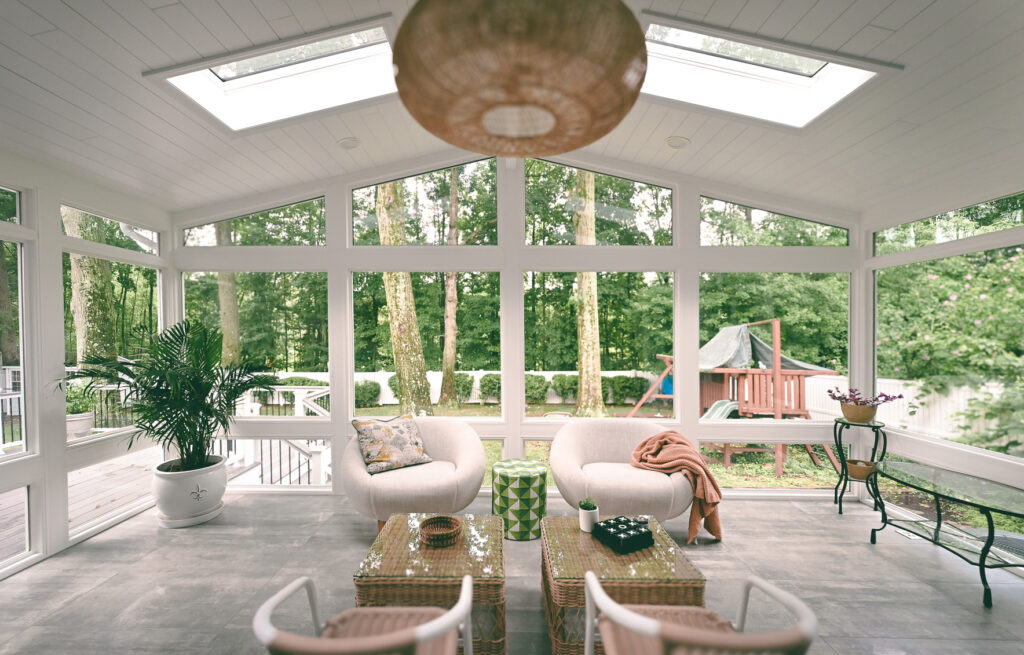
Skylights are light transmitting elements that help form the roof of a home. They are built into the ceiling for the purpose of bringing natural light into the room. Skylights are built with either glass or polycarbonate materials, dependent on the amount of natural light and visibility you want in the room.
Open skylights were first used in the Pantheon during Ancient Roman times. The “oculus,” as the open skylight is referred to, is a. 8.3 meter wide circular opening at the top of the building. Apollodorus built the oculus to bring light and air into the building. Furthermore, the oculus serves as the only source of natural light in the building beyond the entrance. The open skylight brought the elements into the Pantheon, but in some instances, this was welcomed. Rain cooled the building during Rome’s summer months.
Skylights manufactured in the Industrial Revolution began to approach the skylights used in LivingSpace’s sunrooms. By this time, technology had improved to the point that glass could be produced in larger panes. It could also be glazed to help hold it in place and seal out the weather. Therefore, they were useful to people trying to naturally light their homes, and skylights became common in wealthy landowners’ homes.
Today, skylights are more common, and technological advances have made them more efficient for homeowners. LivingSpace makes and installs state-of-the-art skylights for those who want to bring more natural light and enjoyment into a sunroom.
Will a skylight reduce my sunroom’s insulation?
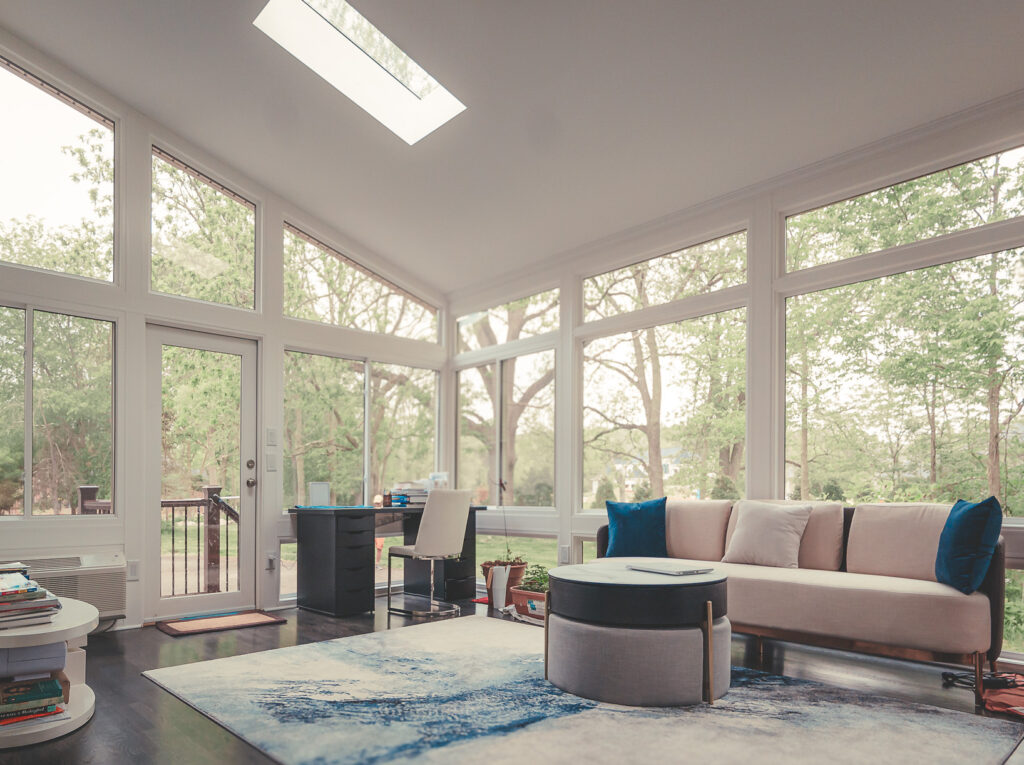
Concerns suggest skylights can create a room that is unusable during the summer or winter because of poor insulation. For example, skylights made with low-quality glass provide poor insulation power. This allows the sun to beat down on sunroom users and creates an uncomfortably warm atmosphere. However, LivingSpace was created around the idea of bringing a true four season sunroom to the market. Consequently, LivingSpace is committed to using materials that allow you to enjoy your sunroom year-round. LivingSpace ensures their skylights are manufactured to function purposefully without corrupting the sunroom.
The type of glass used to construct a skylight is critical to the insulation performance. LivingSpace’s skylights are made using the same high-performing LoE3 glass used in our transitions and elements sunroom collections. Three layers of silver are used within the glass to reflect ultraviolet light and infrared heat. This ensures the skylight is energy efficient and long-lasting.
The R-value, or insulation space, is assured to outperform the national standards dictating construction practices. This ensures that LivingSpace’s skylights will not prevent you from using your sunroom on freezing temperature days. LivingSpace’s insulation glass ranges from 3/8” to 11/8” in overall thickness. Thicker units have greater insulation value because of stronger glass, and more insulation space between the glass. The insulation space between the glass is considered “dead air,” and it is critical to providing insulation. LivingSpace manufactures thicker units for the colder climates it serves to ensure that skylights in the Great Lakes region offer the same usability of skylights in southern Florida. For skylights in extremely cold climates, the “dead air” is replaced with a denser gas substance to create an even greater insulation value.
Lastly, LivingSpace uses a spacer to increase the insulating value and life expectancy of the skylight’s glass. The spacer keeps the pieces of glass separated to create the insulation space, and it is made of materials that help determine the insulation value.
Why do sunroom owners get skylights?
Skylights may be a confusing accessory for a room already flooded with natural light. However, there are many reasonable reasons to consider them when building your sunroom. In terms of natural light, skylights can help if you have privacy concerns. LivingSpace is able to build rooms with smaller windows in these situations without needing to sacrifice natural light.
Skylights provide a wonderful way to go stargazing within your own home. By placing a skylight in your sunroom, you will be able to pull up a couch, lean back, and search for shooting stars in the night sky.
The best skylights are able to find harmony between a window’s U-factor, Solar Heat Gain Coefficient, and Visible Transmittance. Skylights are able to do this as they work to reduce energy use during the day by balancing light transmission with heat loss. If skylights can do this efficiently, they are able to offset the need for mechanical heating and cooling.
Oftentimes, there are unique reasons to request skylights. One LivingSpace customer requested four sunlights in the corner of the sunroom. They explained that the dog liked to lounge in the sun, and they wanted to create a corner area for it to call home. Even in a sunroom full of windows, skylights were able to be used in a unique way to fulfill a specific wish.